Most homes require a 20,000–26,000-watt standby generator to run essential circuits, HVAC, and appliances simultaneously. Calculate total wattage by adding startup and running loads for each device, or consult Moore Electric Inc. in Plaistow, New Hampshire, for a professional load assessment before purchasing your whole-home unit.
Home size, heating system, and whether you’ll charge an EV all factor into proper generator sizing, square footage alone won’t cut it. As our 4-person team in Plaistow sees firsthand, a professional load assessment (factoring in your home’s specific 2,500–3,000+ sq. ft. range and appliance needs) delivers far more accurate kW sizing than online calculators alone.
Generator size depends on home square footage, heating system type, and which circuits require power during an outage. Homeowners weighing whole-home coverage against essential-circuit backup must calculate peak simultaneous load, including EV charging demand. Panels supporting a Level 2 charger often require at least 200 amps of service capacity for accurate, safe sizing decisions.
Key Takeaways
Whole-home generators require calculating your home’s square footage and heating system to determine proper sizing.
Power outages disrupt essential functions including cooking, showering, and operating critical medical devices in your home.
Right-sized generators ensure reliable backup power during severe weather events like hurricanes, snowstorms, and tornadoes.
What Size Generator Does Your House Need?
Correct sizing depends on one core question: how much of the home needs to stay powered when the grid goes down. A household that only needs the refrigerator, sump pump, and a few lights running requires far less capacity than one aiming to keep the whole house, including heating and cooling, fully operational.
Several household factors shape that calculation. Square footage plays a role. So does the type of heating and cooling system in place, along with the fuel source available on the property. A large home with electric heat demands more generating capacity than a smaller home with gas heat and minimal electric load.
New Hampshire’s climate adds another layer to this decision. The state sits in one of the most storm-affected regions in the country. Outages across NH and Maine often hit harder and last longer than homeowners expect. Sizing a generator only for typical, short outages leaves a household exposed when severe weather causes extended downtime.
How do HVAC systems affect generator sizing?
Heating and cooling equipment often draws the largest electrical load in a home. A furnace blower, central air compressor, or electric heat pump can require significantly more starting power than smaller appliances. Any home generator sizing guide should weigh HVAC demand before finalizing a unit size.
Is whole-house coverage always necessary?
Not for every household. Some homeowners prioritize only essential circuits, while others want full coverage for comfort and convenience during longer outages. How to choose a whole house generator setup ultimately comes down to budget, home size, and tolerance for extended power loss.
How Much of Your Home Should It Power?
The answer depends on a single decision: essential-only backup or full-house coverage. Essential-only backup requires a smaller, less expensive generator than one sized to run an entire home. That single choice shapes every step of a home generator sizing guide, from load calculations to installation cost.
Determining what size generator for my house actually fits starts with a whole-home load assessment, not a guess based on square footage or a neighbor’s setup. A licensed electrician measures the electrical draw of major systems, heating equipment, and appliances before recommending a unit. Guesswork leads to undersized systems that trip under load or oversized ones that waste money.
What's the difference between essential-only and whole-house backup?
Essential-only systems power a defined list: refrigeration, a sump pump, select lighting circuits, and medical equipment. Whole-house systems carry the full electrical load, including central air, water heaters, and every outlet in the home. Coverage level, not home size alone, drives the sizing decision.
Two components matter once sizing is set:
Load assessment results determine the generator’s kilowatt rating
An automatic transfer switch installs alongside the unit, shifting power from utility to generator without manual action
How to choose a whole house generator comes down to matching assessed load to a standby unit that starts automatically, keeping the home running through the next outage.
How Do You Choose a Whole House Generator?
Choosing a whole house generator starts with an accurate assessment of a home’s electrical load, not a guess based on square footage alone. A professional load assessment helps ensure the sizing is correct and keeps performance reliable during an outage. Skipping this step risks an underpowered unit that trips under load. An oversized system that wastes money on capacity never used.
Homeowners researching a home generator sizing guide will find that equipment selection matters as much as capacity. Moore Electric installs standby generators that turn on automatically, offering a tested path for homeowners who want coverage beyond a few essential circuits.
Sizing correctly answers the question of what size generator for my house. Installation quality determines whether that sizing holds up. Permits and inspections form part of a compliant installation, not an optional add-on, protecting homeowners from code violations and insurance complications later.
Who Should Oversee a Generator Installation?
Installation overseen by a licensed Master Electrician adds a layer of accountability to sizing and setup. This oversight reduces the risk of wiring errors, transfer switch miscalculations, and inspection failures that delay a system going live.
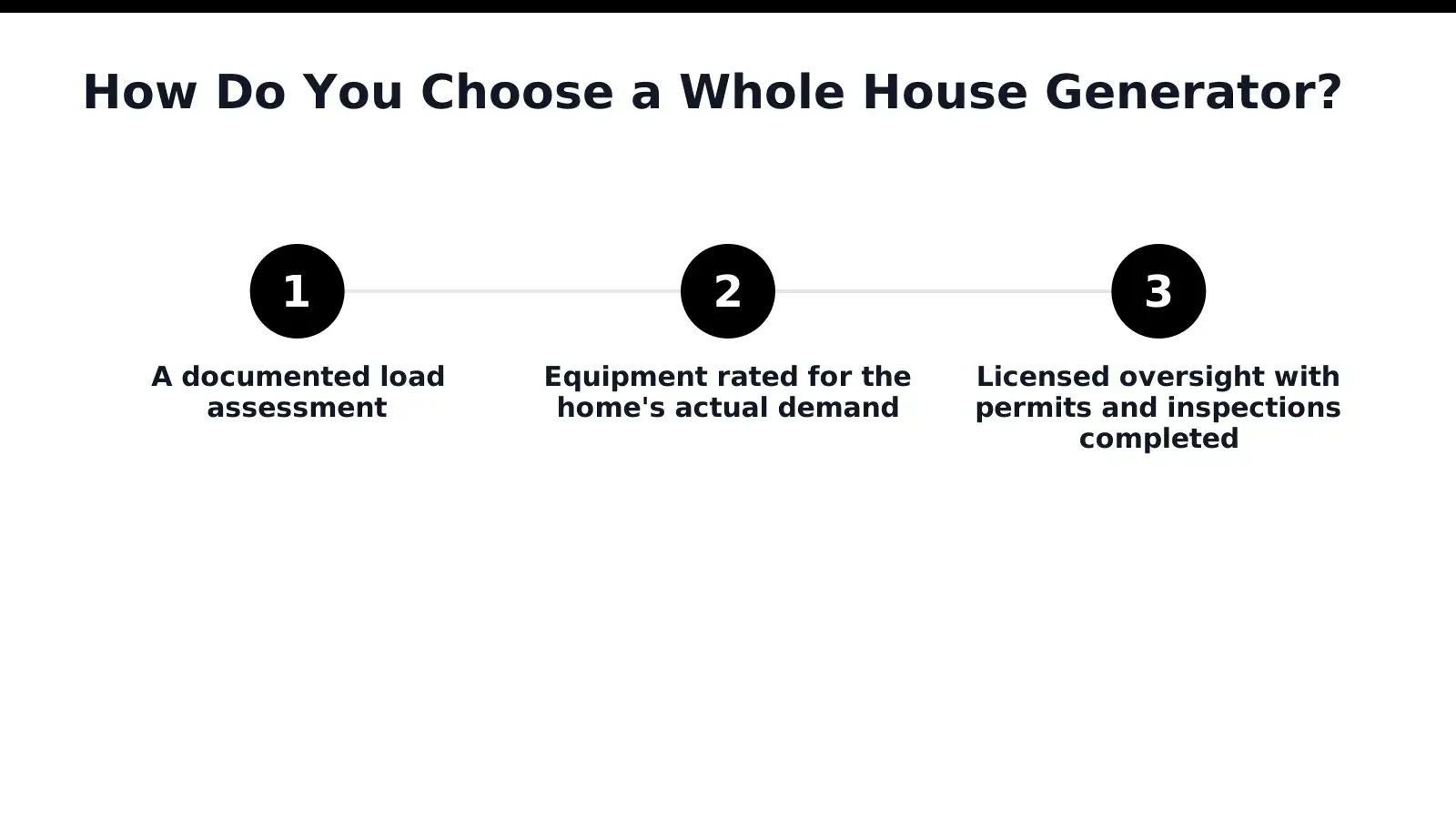
How to choose a whole house generator comes down to three checkpoints:
A documented load assessment
Equipment rated for the home’s actual demand
Licensed oversight with permits and inspections completed
FAQ
What factors determine the right generator size for my home?
Peak simultaneous load, including EV charging demand, also factors into accurate, safe sizing decisions.
Why does HVAC equipment matter so much in sizing?
A furnace blower, central air compressor, or electric heat pump requires significantly more starting power than smaller appliances. HVAC demand must be weighed before finalizing a unit size.
Do I need a generator that powers my entire house?
Not necessarily, some homeowners prioritize only essential circuits like the refrigerator, sump pump, and lights. Others want full coverage for longer outages. The right choice depends on budget, home size, and tolerance for extended power loss.
Conclusion
In closing, selecting the appropriate generator size requires a methodical assessment of your home’s electrical demands, fuel preferences, and budget constraints. By calculating your essential loads, understanding the distinction between running and starting watts, and consulting with a qualified electrician, you establish a foundation for reliable backup power. This deliberate approach ensures your standby generator delivers the capacity your household requires when utility power fails, providing both security and peace of mind for years to come.