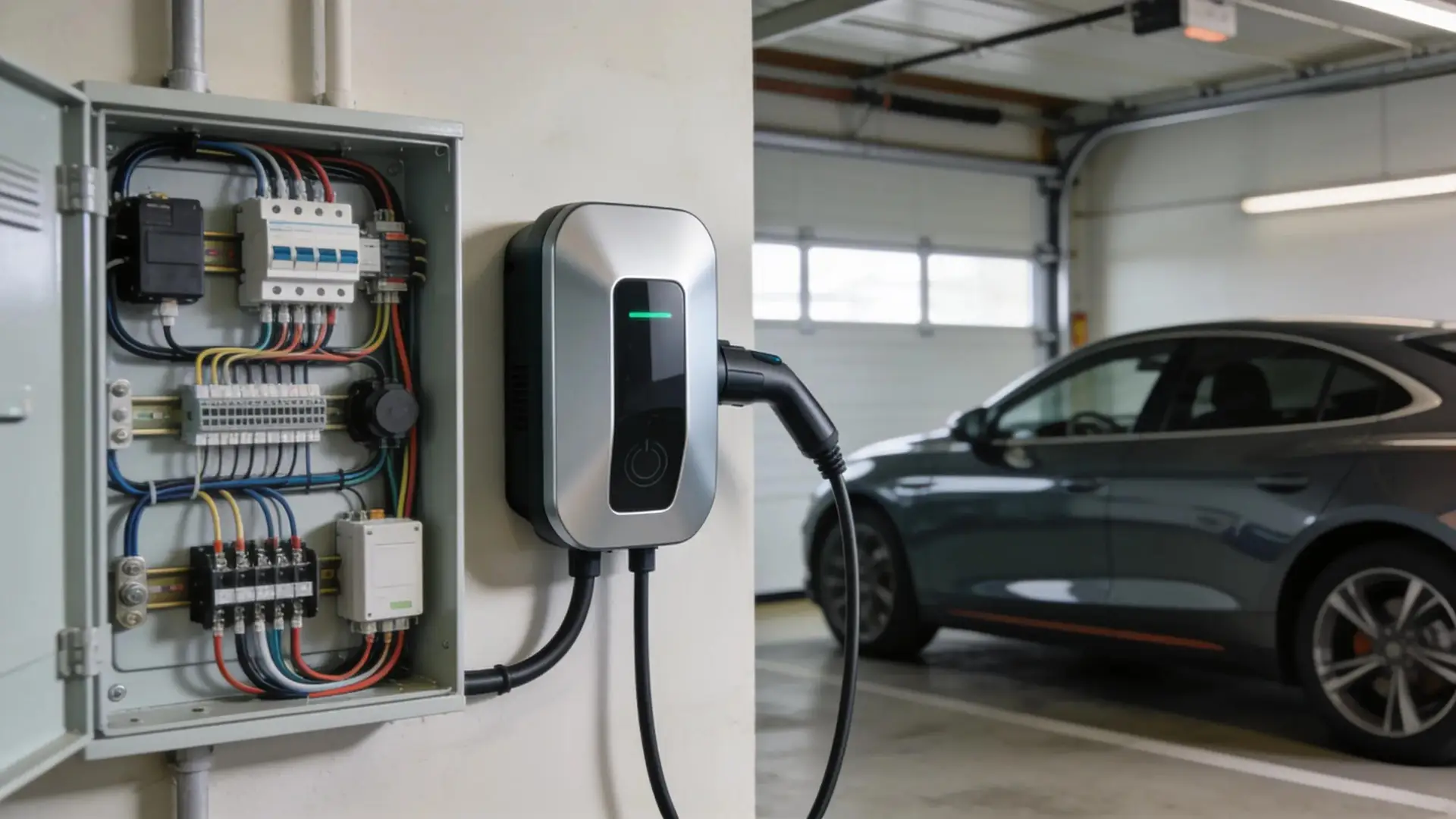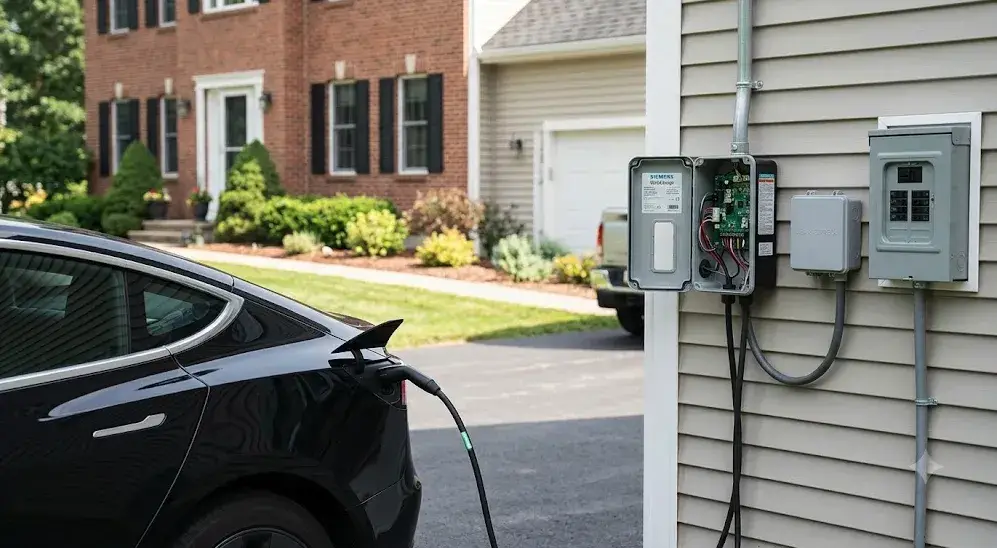
A standby generator and your electrical panel have to work together. If the panel cannot handle the load, the generator cannot do its job. That sounds simple, but most homeowners in Plaistow and the surrounding towns do not realize the connection until they are already planning a generator project.
Here is what actually determines whether your panel needs an upgrade before the generator goes in.
How Does Your Electrical Panel Affect Generator Installation?
Every standby generator connects to your home through a transfer switch, which sits between the utility feed and the panel. When the power goes out, the transfer switch disconnects from the grid and routes generator power through the panel to your circuits.
The panel has to have enough capacity and physical space for this to work. A 100-amp panel that is already near its limit cannot safely distribute generator power to the circuits you want covered. And if there are no open breaker slots for the transfer switch connection, the installation cannot proceed without panel work first.
Brenden Moore checks three things during every generator estimate: the panel’s amperage rating, how many circuits are already loaded, and whether the bus bar has room for a transfer switch hookup. About half of the generator projects Moore Electric handles in southern NH and northern MA also involve some level of panel upgrade work.
What Panel Size Do You Need for a Whole-Home Generator?
A whole-home standby generator rated at 22kW or higher typically needs a 200-amp panel. If your home runs a 100-amp or 150-amp panel, an upgrade is almost always part of the project.
Partial-load generators (covering heat, refrigeration, a sump pump, and a few circuits) can sometimes work with a 100-amp panel if there is enough headroom. But “enough headroom” is not a guess. It requires a load calculation that accounts for everything currently drawing power, including any recent additions like a heat pump, hot tub, or EV charger.
In New Hampshire, the permit process for generator installation includes an electrical load review. The inspector will flag an undersized panel. Getting the upgrade done as part of the generator project, rather than after a failed inspection, saves time and a second round of permits.
What Are the Warning Signs Your Panel Cannot Handle a Generator?
You do not always need a full engineering study to know there is a problem. These are the signs Moore Electric sees most often during standby generator installation assessments:
The panel is rated at 100 amps or less. Most homes built before 1990 in Plaistow, Haverhill, and the surrounding area fall into this category.
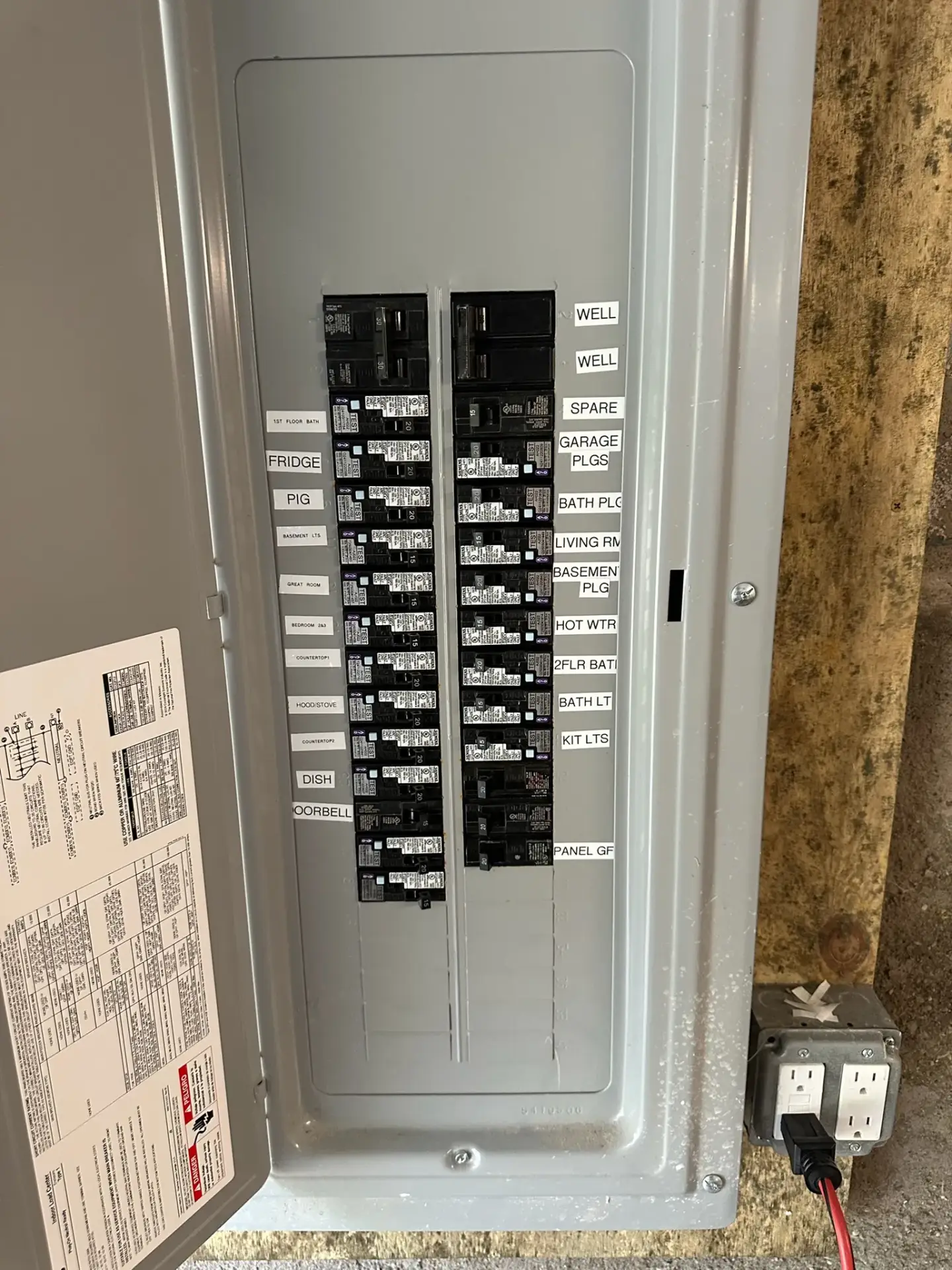
Every breaker slot is full. No room for a transfer switch means no generator connection without panel work.
Breakers trip when multiple appliances run. That indicates the panel is already at or near capacity under normal grid power, let alone generator power.
The panel is a Federal Pacific or Zinsco. These brands have known safety issues and should be replaced regardless of whether a generator is involved.
You have added major loads since the home was built: central air, a heat pump, an EV charger, a workshop, or an addition.
How Much Does a Combined Generator and Panel Upgrade Cost?
Moore Electric provides a single written estimate that covers the full scope: generator, transfer switch, concrete pad, gas line coordination, and any panel work. You see the number before any work starts.
The panel portion of the project typically follows the same range as a standalone electrical service upgrade, and bundling it with the generator install means one permit, one inspection, and one crew mobilization instead of two separate projects.
Financing is available for qualifying customers. Ask about payment options when you call for your estimate.
What Happens During the Assessment?
Brenden inspects the panel, runs the load calculation, checks the proposed generator location (clearances, gas line routing, utility setback), and walks you through what the project involves. If a panel upgrade is part of it, he explains why and what it adds to the scope.
Moore Electric handles the permit, the utility coordination with Eversource or National Grid, the concrete pad, and the final inspection. The standby generator installation and the panel upgrade are done as one project by the same crew.
Frequently Asked Questions
Can I install a generator without upgrading my panel?
Sometimes. If your panel is 200 amps, has open breaker slots, and your load calculation shows room, you may not need an upgrade. A partial-load generator on a 100-amp panel is also possible in some cases. The assessment tells you for certain.
Does Moore Electric handle both the generator and the panel upgrade?
Yes. Both are done as one project: one estimate, one permit, one crew. Brenden holds Master Electrician licenses in NH (#14511), MA (#22825), and ME (#MS60023064).
How long does a combined generator and panel project take?
Most combined projects finish in two to three days. The panel upgrade is typically completed on day one, and the generator installation and commissioning follow.