EV Charger Maintenance, Troubleshooting & Safety Tips
Ensure the safety and longevity of EV chargers with best practices for care and maintenance. Trust in reliable advice for a secure charging experience.
Ensure the safety and longevity of EV chargers with best practices for care and maintenance. Trust in reliable advice for a secure charging experience.
Electric vehicle (EV) charging stations, also known as Electric Vehicle Supply Equipment (EVSE), come in various types designed to meet different charging needs and power levels. Understanding these distinctions is crucial for proper maintenance and troubleshooting. Level 1 chargers utilize a standard household outlet and are the slowest but most accessible option, while Level 2 chargers require a dedicated 240-volt circuit, offering significantly faster charging speeds for home and public use. More advanced DC fast chargers, typically found in public stations, deliver high-power direct current for rapid charging.
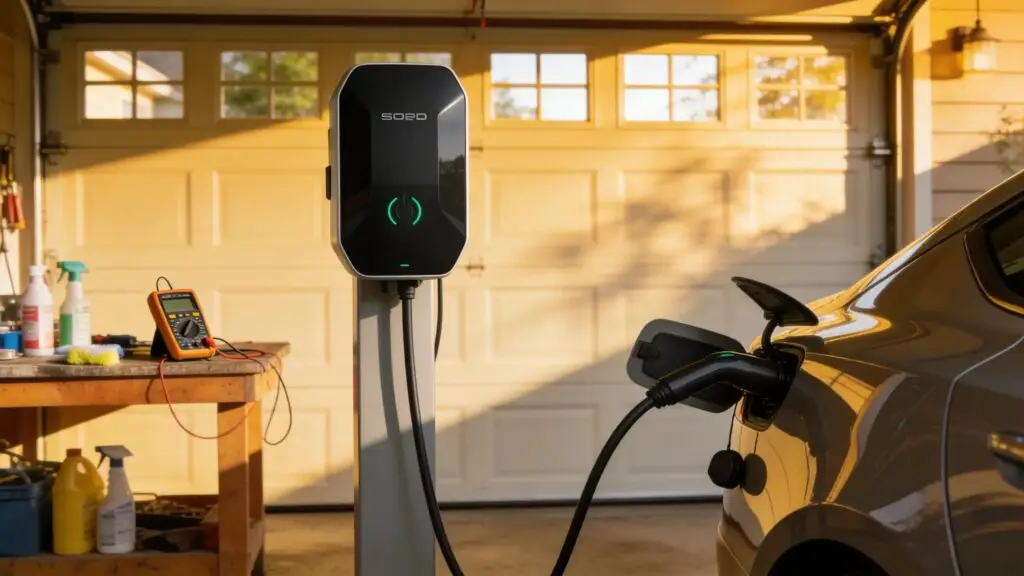
Key components of an EV charger include the charging cable, the connector that interfaces with your vehicle, the control box which manages the charging process and communicates with the car, and the power source connection. Each of these elements plays a vital role in delivering electricity safely and efficiently. Regular inspection of the cable for damage, ensuring the connector is clean and free of debris, and verifying the control box is functioning correctly are fundamental aspects of EV charger maintenance.
Regular maintenance is key to ensuring your EV charger operates safely and efficiently for years to come. This involves a combination of visual inspections and simple cleaning routines. Keeping the charging cable and connector clean and free from dirt, debris, and moisture is paramount to prevent corrosion and ensure a secure connection. Similarly, inspect the charging station's housing for any signs of damage, such as cracks or loose fittings, which could compromise its weather resistance and internal components.
Beyond visual checks, it's important to periodically test the charger's functionality. Ensure that it initiates charging when connected to your EV and that the charging process completes without interruption. For Level 2 chargers, which are hardwired, it's advisable to have a qualified electrician perform an annual inspection to check the circuit breaker, wiring connections, and overall system integrity. Adhering to these maintenance practices not only prolongs the life of your charger but also safeguards your vehicle and property.
When your EV charger isn't functioning as expected, several common troubleshooting steps can help identify and resolve the issue without immediate need for professional service. The first step is to check the power source; ensure the circuit breaker for the charger has not tripped. If it has, reset it once. If it trips again, there may be a more significant electrical issue requiring professional attention. Also, verify that the charging cable is securely plugged into both the charging station and your vehicle.
Another common point of failure can be the vehicle's charging port or the charger's connector. Inspect both for any visible damage or debris. Sometimes, simply cleaning the connector with a dry cloth can resolve connection issues. If your EV displays an error message related to charging, consult your vehicle's manual for specific troubleshooting advice. For persistent problems, such as the charger not initiating a charge, error codes displayed on the unit, or unusual noises, it is best to contact Moore Electric Inc. for expert diagnosis and repair.
Safety is the most critical aspect of owning and operating an electric vehicle charging station. These units handle significant electrical current, and improper installation or maintenance can pose serious risks, including electrical shock, fire hazards, and damage to your vehicle. Always ensure that your EV charger is installed by a licensed and experienced electrician who understands local electrical codes and the specific requirements for EVSE installation. This includes proper grounding and the use of appropriately sized wiring and circuit breakers.
Beyond professional installation, users must be vigilant about the ongoing safety of their charging setup. Avoid using damaged charging cables or connectors, and never attempt to charge in wet conditions unless the equipment is specifically rated for such use. Regularly inspect the charging area for any potential hazards. For commercial installations, ensure that charging stations are clearly marked and that safety protocols are communicated to users. Moore Electric Inc. prioritizes safety in all its electrical services, including EV charger installations and maintenance, ensuring peace of mind for all clients.